


 0
0
L-Lysine and Exercise: Muscle, Collagen, Carnitine and Performance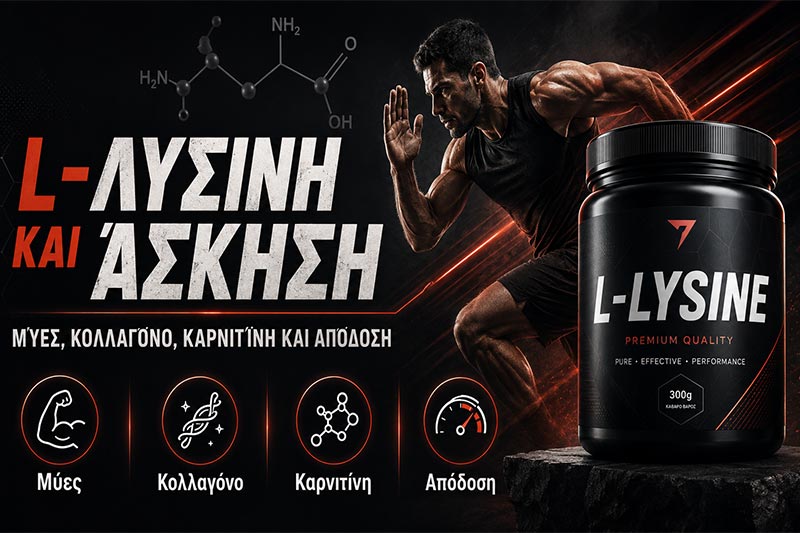 L-Lysine is one of the nine indispensable amino acids. Humans cannot synthesize enough lysine to meet their requirements, so it must be supplied through dietary protein. EFSA classifies lysine as strictly indispensable and notes that normal mixed European diets containing adequate protein are generally unlikely to be limiting in indispensable amino acids. For athletes, lysine is relevant because it is incorporated into body proteins and also participates indirectly in processes involving collagen and carnitine synthesis. However, this biological importance does not mean that isolated high-dose L-Lysine supplementation increases strength or muscle growth. L-Lysine and Muscle ProteinLysine is an essential building block for protein synthesis. When an indispensable amino acid is insufficient, normal protein production can become limited. For athletes, however, muscle protein synthesis depends on adequate total protein and the availability of the full complement of indispensable amino acids rather than lysine alone. EFSA established a general adult protein PRI of 0.83 g/kg body mass per day, while optimal sports-nutrition intake can be higher depending on training type, volume and goals. Isolated lysine should therefore not be considered a replacement for adequate dietary protein or a complete amino-acid strategy. The category currently contains EAA and individual amino-acid products. Does L-Lysine Increase Strength?There is no strong evidence that isolated lysine supplementation increases muscular strength in people whose dietary requirements are already met. A review of purported ergogenic amino acids concluded that lysine, whether used alone or with arginine or ornithine, has not been shown to enhance muscular strength or power in experienced resistance-trained individuals. The presence of lysine in a sports supplement should therefore not automatically be interpreted as evidence of an ergogenic effect. L-Lysine and Growth HormoneAn older sports-nutrition claim involves combining lysine with arginine to increase growth hormone. In a controlled trial, consuming 1,500 mg arginine plus 1,500 mg lysine immediately before resistance exercise did not enhance the exercise-induced growth-hormone response. Broader evaluation of the literature similarly found no reliable evidence that lysine-containing amino-acid supplements enhance exercise-stimulated growth hormone, muscular strength or power. L-Lysine should therefore not be considered a proven “GH booster.” L-Lysine and CollagenLysine also has an important structural role within connective tissue. Lysine residues undergo modifications involved in collagen cross-link formation, helping stabilise collagen and the extracellular matrix. A recent review of lysine biology describes its involvement in collagen and elastin structure and stability. This is relevant to tissues including tendons, ligaments, cartilage and bone. However, lysine's physiological involvement in collagen does not prove that isolated supplementation prevents sports injuries or accelerates tendon recovery. L-Lysine and CarnitineLysine also contributes to endogenous L-Carnitine biosynthesis. Carnitine is produced through a pathway beginning with trimethyllysine derived from protein-bound lysine, followed by several enzymatic reactions. Carnitine participates in mitochondrial fatty-acid transport, but this does not mean that consuming more lysine automatically produces more carnitine or greater fat oxidation. Lysine is only one component within a regulated biosynthetic pathway. L-Lysine and CalciumAn older human study found that L-Lysine could increase intestinal calcium absorption and reduce renal calcium loss under the experimental conditions studied. This created interest in a possible relationship between lysine and bone metabolism. However, evidence is insufficient to conclude that supplemental lysine increases bone density or reduces injury risk in healthy athletes. How Much Lysine Does an Adult Need?EFSA does not establish separate DRVs for individual indispensable amino acids, because in normal diets amino acids are primarily consumed as components of dietary proteins. International FAO/WHO/UNU assessments have used an adult lysine requirement of approximately 30 mg/kg body mass per day. Recent research notes that this conventional figure is based largely on data from younger adults. In practical sports nutrition, ensuring adequate high-quality protein intake is generally more useful than attempting to calculate isolated lysine intake. Dietary Sources of LysineLysine is abundant in protein-rich foods including:
Some cereal proteins are relatively lower in lysine than animal proteins or legumes. Nevertheless, EFSA considers normal mixed European diets unlikely to be lysine-limiting when overall protein intake is sufficient. What About Vegan Athletes?Well-planned plant-based diets can supply sufficient lysine. Legumes and soy are particularly useful sources, while diets heavily dominated by cereals and low in total protein may require more attention to lysine and overall indispensable amino-acid intake. Is There an Upper Intake Level?There is no established official European UL specifically for supplemental L-Lysine. A 2019 systematic safety review evaluated a wide range of human intakes and proposed 6 g/day as a no-observed-adverse-effect level for supplemental lysine in healthy adults. This is a research-derived safety proposal rather than an official European UL. At higher supplemental intakes, reported adverse effects have mainly involved gastrointestinal symptoms. ConclusionL-Lysine is an essential amino acid, so adequate intake is required for normal protein synthesis. It also has physiological roles related to collagen structure and endogenous carnitine synthesis. For athletes, however, adequacy should not be confused with ergogenic megadosing. There is no strong evidence that isolated L-Lysine increases muscle mass, strength or exercise-induced growth hormone when total dietary protein is already sufficient. The main priority remains adequate total protein and a complete supply of all indispensable amino acids. FAQDoes L-Lysine increase muscle growth?Lysine is required for protein synthesis, but additional isolated lysine has not been shown to increase muscle mass when protein intake is already adequate. Does L-Lysine increase growth hormone?Lysine combined with arginine before resistance exercise did not enhance the exercise-induced GH response in a controlled trial. What does lysine have to do with collagen?Lysine residues participate in modifications and cross-links that contribute to collagen stability. What is the relationship between lysine and carnitine?Protein-bound lysine is a metabolic precursor to trimethyllysine used in endogenous carnitine synthesis. This does not mean additional lysine automatically increases fat burning. Does every athlete need an L-Lysine supplement?No. When adequate protein and indispensable amino acids are obtained through the diet, there is no strong evidence that isolated L-Lysine is a necessary performance supplement. References
|

Το Νο1 eshop Κάνναβης




(c) katereloscbd.gr - All rights reserved - By: Hyper Center -